THE WORK CHANGES.
the
practice evolves.
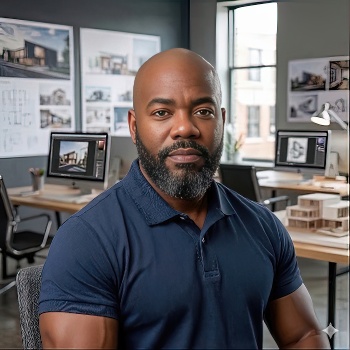
My work spans visual design, media, interactive technology, enterprise software, product design, and creative production. Each discipline has shaped how I approach a problem, develop an idea, and bring it to life.
A practice across disciplines
These periods overlap because the work didn’t move neatly from one discipline to another. Each experience added a new perspective, building on what came before.
Design connects the thinking, decisions, and execution that bring an idea to life.
Where I've Worked
Environments- Enterprise & Mission-Critical Systems
- Fintech & Transactional Platforms
- Healthcare & Administrative Systems
- Automotive & Embedded Technology
- Commercial Brands & Consumer Web
- Independent Studio Practice
What I've Designed For
MediumsThe mediums change. The tools evolve. The thinking remains.
THE PRACTICE
A repeatable process, adapted to the problem—not a template forced onto every project.
-
01 / INVESTIGATE
Understand the context.
Listen to the people involved, examine the environment, and learn what needs to be accomplished.
-
02 / UNDERSTAND
Identify the underlying need.
Separate symptoms from causes and define what a successful outcome should achieve.
-
03 / STRUCTURE
Bring clarity to the problem.
Organize information, relationships, content, and decisions into a coherent system.
-
04 / VISUALIZE
Make the direction visible.
Translate the structure into something people can see, navigate, discuss, and evaluate.
-
05 / BUILD
Bring the solution to life.
Create the interface, prototype, code, motion, or deliverable the project requires.
-
06 / REFINE
Test, learn, and improve.
Evaluate what works, address what doesn’t, and refine the solution until it holds together.
01 — STUDIO Early 1990s → 1995
Learning to see.
My career began with the fundamentals of visual communication. Drawing. Photography. Sculpture. Composition. Form. Space. Light. Typography. Materials.
Before designing interfaces, I was learning how to look at things.
Those questions became the foundation for everything that followed. The medium was physical. The thinking was already systematic. I learned that making something look right wasn't enough. It had to communicate an idea, hold together as a composition, and work within the constraints of the medium. That became my first design system.
Learn to see before learning to make.
02 — PRODUCTION & MEDIA 1995 → 1999
Learning how ideas get made.
The work moved from the studio into production.
Pre-press. Digital imaging. Photography. Typesetting. Color. Scanning. Image preparation. Reproduction.
This was a different kind of design environment. An idea wasn't finished when it looked good on the screen. It had to survive production.
That experience changed the way I thought about design. I began to understand that the finished piece was only one part of the process. The preparation, technical decisions, production requirements, and coordination were equally important. That understanding would follow me into every medium that came afterward.
Design is the system that gets the thing made.
03 — MEDIA & MOTION 1995 → 1999
Learning to design in time.
The next transition was from the still image to moving media.
Video. Editing. Compositing. Motion graphics. Broadcast. Interactive media.
Now the work had another dimension: time.
- • A frame could change.
- • An image could move.
- • Information could appear, disappear, transition, or build.
- • A visual idea could become a sequence rather than a single composition.
This expanded the way I thought about communication. I wasn't only asking:
I was asking:
That distinction became important later when interfaces became interactive. Motion taught me to think about transitions, hierarchy, pacing, attention, sequence, and response.
The screen was no longer simply a surface. It was becoming a place where something could happen.
04 — DIGITAL & INTERACTIVE 1997 → 2004
Learning to make complexity understandable.
As digital media moved onto the web and into interactive environments, the nature of the work changed again. People weren't just watching anymore.
The design problem became less about creating an individual visual and more about creating an experience that could respond to another person. This was where visual design, information architecture, interaction, and technology began converging for me.
Instead of passive observation, users engaged in active behaviors:
- • Clicking.
- • Navigating.
- • Searching.
- • Entering information.
- • Making decisions.
- • Moving through systems.
I learned to look at a design not simply as a page, but as a sequence of decisions:
- • Where does someone enter?
- • What do they need to understand?
- • What happens when they make a choice?
- • What information should appear?
- • What should happen next?
- • How does one screen relate to another?
The work was becoming less about designing things and more about designing relationships between things. That shift would eventually lead directly into enterprise software and product design.
Design relationships, not just things.
05 — ENTERPRISE & INFORMATION 2004 → 2010
Learning to understand complex systems.
As my work moved deeper into enterprise environments, the problems became larger. The interfaces were no longer isolated pages.
The challenge was often not creating something new. It was understanding something that already existed.
Interfaces evolved into mission-critical, large-scale systems:
The work required information architecture and systemic diagnosis:
- • Follow the workflow and ask critical questions.
- • Understand the people using it and the business driving it.
- • Expose systemic contradictions and hidden workarounds.
- • Separate necessary logic from accumulated noise.
The challenge was turning that complexity into something people could understand and use. The interface was only the visible part. The real work was underneath it: structure.
The interface is only the visible part. Structure is the real work.
06 — MOBILE, PHYSICAL & SPATIAL 2010 → 2015
Learning to design for context.
As interfaces moved beyond the desktop, the environment itself became part of the design problem.
Mobile devices. Touchscreens. Kiosks. Embedded systems. Augmented reality. Physical environments.
The interface was no longer always in front of someone sitting at a desk. It could be in their hand, mounted on a wall, built into a machine, placed in a public space, or layered onto the physical world.
The device mattered. The surroundings mattered. Touch, visibility, movement, and response time mattered. The design had to work in the context where it would actually be used.
- • The device becomes part of the interaction.
- • The physical environment affects visibility and use.
- • Touch and movement shape the experience.
- • Timing and feedback influence confidence.
Design the interaction between a person, a system, and an environment.
07 — PRODUCT 2015 → Present
Where the disciplines converge.
Over time, the boundaries between visual design, interaction, technology, and product became increasingly connected.
Product design is not a departure from the work I've done before. It is a convergence of it.
Designing interfaces meant holding the entire context in mind:
- • Designing interfaces & workflows simultaneously.
- • Building robust systems & reusable components.
- • Planning how work will actually be engineered.
- • Anticipating user experience after shipping.
- • Balancing standardization with flexibility.
- Visual Discipline From Studio
- Production Discipline From Physical & Digital
- Understanding of Time From Motion & Broadcast
- Interaction Discipline From Web & Interactive
- Systems Thinking From Enterprise
Technology became another material through which all of those things could be expressed. And now AI is becoming another material as well.
Not the practice.
The material.
Design technology is where the disciplines converge.
My practice brings together product design, interaction, information architecture, visual systems, prototyping, front-end technology, motion, and creative production.
The goal isn’t to force every project into the same format. It’s to understand what the problem requires and choose the right combination of design, technology, and production to solve it.
Different problems call for different forms of work.
Sometimes the answer is a product interface. Sometimes it’s a design system, a prototype, a website, motion, or an entirely different medium. The tools will continue to evolve. The discipline is knowing when and how to use them.
An independent practice built to bring ideas to life.
Workmen Studio brings product thinking, design, code, motion, and creative production together around the needs of each project.
Capabilities
- Product design
- Design technology
- Digital experiences
- Interactive media
- Motion and creative production
Different outputs. One connected practice.